Whenever I see this headline, the pedant in me asks, shouldn’t every interplanetary space mission alter the path of celestial bodies? Like, if we launch a probe away from earth, the mass used to build and generally propel it came from earth and we’ve ejected it from earths gravity well, shouldn’t that give earth a tiny kick in the opposite direction? Or if a gravity assist is used, momentum gained comes from whatever planet we get the assist from. Obviously there’s a big difference in scale given the mass of planets vs asteroids, but still. Do they just mean the first time we’ve been able to actually measure this change, or just not counting missions where this wasn’t the intent behind it?
They were able to use the changes in orbit to calculate the densities of the asteroids, so maybe it’s the first time they were able to alter it enough that the changes can be used to calculate that sort of thing.


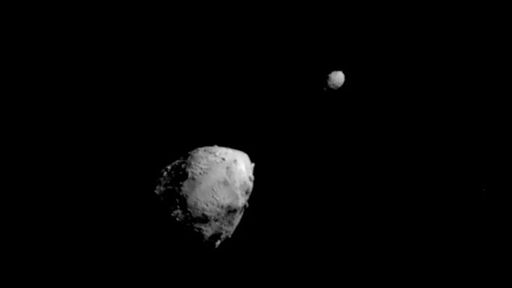
Whenever I see this headline, the pedant in me asks, shouldn’t every interplanetary space mission alter the path of celestial bodies? Like, if we launch a probe away from earth, the mass used to build and generally propel it came from earth and we’ve ejected it from earths gravity well, shouldn’t that give earth a tiny kick in the opposite direction? Or if a gravity assist is used, momentum gained comes from whatever planet we get the assist from. Obviously there’s a big difference in scale given the mass of planets vs asteroids, but still. Do they just mean the first time we’ve been able to actually measure this change, or just not counting missions where this wasn’t the intent behind it?
They were able to use the changes in orbit to calculate the densities of the asteroids, so maybe it’s the first time they were able to alter it enough that the changes can be used to calculate that sort of thing.
Yes, first time they have measured the change. The relative mass of a rocket ship to the earth makes the effect on earth insignificant.