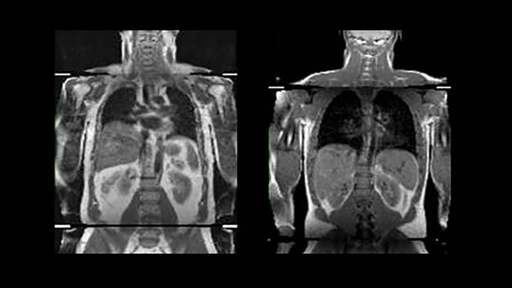
Irrespective of weight loss, maintaining a lower level of visceral fat—fat stored deep within the abdomen, wrapping around vital organs—may lead to better long-term cardiometabolic and cognitive health, according to two new Harvard Chan School studies.
I’m not sure the complaint about the MED questionnaire calls the study itself into question.
The study followed people who did follow randomized selection criteria in earlier studies, so the initial weight loss and fat loss did come out of a randomized protocol. Then, years later, they showed that those original random selections did have long lasting effects in visceral fat deposits, even for those who gained all their weight back. So far, we’ve got evidence that randomized interventions work at reducing visceral fat, which strongly suggests causation.
Then, they showed correlations between low visceral fat and other cognitive effects, and brain scan effects, suggesting causation there, too.
They did mention that they used the MED score in multivariate analysis, but didn’t try to make any particular casual or even correlative link with that MED variable itself. They just put it in so that MED scores didn’t show up as a confounding variable.
In other words: reducing visceral fat is good for the brain, and we’re pretty sure there’s causation here. Looking at people’s self reported diets did not disrupt that core finding.
In other words: reducing visceral fat is good for the brain
You (and the paper) are way too comfortable with claiming causation. The MED score was used specifically to reduce the possibility that there was another cause for both the lowered visceral fat and the cognitive measures and assumes the original interventions caused VAT reduction. If there is a known dietary intervention that works over 5 or 10 years to reduce weight, that alone would be a miracle since I’ve never seen any study of an intervention that can even guarantee a ten percent loss sustained over two years excepting gastric bypass. Self reported data about ones diet over five or ten years is practically worthless in my eyes. Can you tell me how many ounces of food your lunch was exactly one month ago? Neither could the participants. I bet their levels of physical activity may fluctuate year by year as well, especially at the age many of the participants were at. How many MET hours is also something typical people will not be able to accurately know or give a meaningful answer that covers 5 or 10 years.
Bad data does not lead to a strong conclusion.
Nonetheless, the prospective design, extended follow-up, and clear temporal sequence between MRI analyses support the plausibility of long-term associations. Dietary and lifestyle patterns at follow-up were systematically assessed, and the MED diet adherence score was included in all multivariable models to account for post-trial behaviors.
structured lifestyle questionnaires regarding diet, smoking habits, clinical data, and physical activity (PA) levels (quantified as metabolic equivalent of task (MET)-hours per week)41 were collected at baseline, end of intervention, and follow-up (5–16 years post-RCT), with dietary patterns additionally evaluated using the validated 14-item MED Diet Adherence Screener at follow-up.
But my argument is that even if the MED score is completely worthless, and completely ignored by the study design, the causation and correlation between the actual variables people care about are there: those randomly selected for interventions in prior studies now have less visceral fat, and score higher on certain cognitive measures, even if they gained all their weight back.
I’m not disagreeing with you about how much value the MED scores provide. I’m just looking at how the study used the MED scores and I’m satisfied that what you’re describing doesn’t affect the core findings.


I’m not sure the complaint about the MED questionnaire calls the study itself into question.
The study followed people who did follow randomized selection criteria in earlier studies, so the initial weight loss and fat loss did come out of a randomized protocol. Then, years later, they showed that those original random selections did have long lasting effects in visceral fat deposits, even for those who gained all their weight back. So far, we’ve got evidence that randomized interventions work at reducing visceral fat, which strongly suggests causation.
Then, they showed correlations between low visceral fat and other cognitive effects, and brain scan effects, suggesting causation there, too.
They did mention that they used the MED score in multivariate analysis, but didn’t try to make any particular casual or even correlative link with that MED variable itself. They just put it in so that MED scores didn’t show up as a confounding variable.
In other words: reducing visceral fat is good for the brain, and we’re pretty sure there’s causation here. Looking at people’s self reported diets did not disrupt that core finding.
You (and the paper) are way too comfortable with claiming causation. The MED score was used specifically to reduce the possibility that there was another cause for both the lowered visceral fat and the cognitive measures and assumes the original interventions caused VAT reduction. If there is a known dietary intervention that works over 5 or 10 years to reduce weight, that alone would be a miracle since I’ve never seen any study of an intervention that can even guarantee a ten percent loss sustained over two years excepting gastric bypass. Self reported data about ones diet over five or ten years is practically worthless in my eyes. Can you tell me how many ounces of food your lunch was exactly one month ago? Neither could the participants. I bet their levels of physical activity may fluctuate year by year as well, especially at the age many of the participants were at. How many MET hours is also something typical people will not be able to accurately know or give a meaningful answer that covers 5 or 10 years.
Bad data does not lead to a strong conclusion.
But my argument is that even if the MED score is completely worthless, and completely ignored by the study design, the causation and correlation between the actual variables people care about are there: those randomly selected for interventions in prior studies now have less visceral fat, and score higher on certain cognitive measures, even if they gained all their weight back.
I’m not disagreeing with you about how much value the MED scores provide. I’m just looking at how the study used the MED scores and I’m satisfied that what you’re describing doesn’t affect the core findings.