

- cross-posted to:
- technology@lemmy.world
cross-posted from: https://lemmy.world/post/49103510
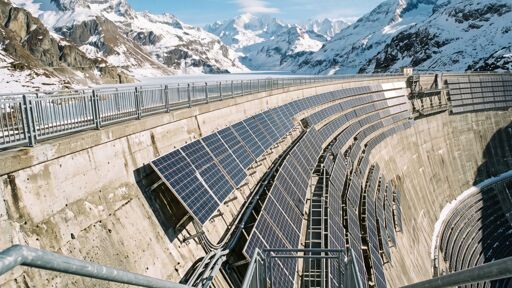
Up on the dam, almost everything that looks like a problem becomes an advantage.
The plant sits above the fog line, in thin, clear air that lets far more sunlight through.
The higher you go, the stronger and cleaner the sunlight becomes.
Cold actually helps, because solar panels work more efficiently when they are not baking in heat.
And then there is the snow, which acts like a giant mirror, bouncing extra light up onto the panels from below.
Scientists call it the albedo effect, and it can lift a mountain plant’s output well beyond anything possible in the valley.
A test site at a similar height recorded yearly output far above a typical Swiss plant.
3 time as much as a valley installation did sound disappointingly meager, and I was about to comment so, until I read the actual article:
https://www.axpo.com/ch/en/energy/generation-and-distribution/solar-power/alpinsolar.html
Turns out, the heading and text snippet somewhat understates the wintertime production during the darkest months.

Look at this figure, almost flat production across the year, which is a huge thing:
But most importantly, it does not compare it to plants in the valleys, but to plants on the Swiss plateau, which is basically mainly flat and devoid of the usual very steep and shaded Swiss valleys.
So this is an unexpectedly great.
Alpine solar power plants for the win, as it seems!