
651·
2 days agoHow do you even live with yourself if you’ve been a part of those proceedings?
How do you even live with yourself if you’ve been a part of those proceedings?

Fucking technologically illiterate nincompoops.
Good for him, even better for us.

So, how is electing a serial rapist con-artist working out for you, America?
I don’t care if he enjoys it or not. If it prevents him from passing on his clearly defective genes, I’m all for him chasing that Darwin Award.
The AI industry is apparently in need of a file system check.
I’m emphatically not saying somebody should soccer-kick Altman repeatedly right in the scrotum, I’m just saying I’d enjoy a good drink with a sigh of contentment if someone did.
Parkington fired dozens of AK-47 rounds at officers
The Nazi was using an AK-47? Tsk. tsk.
That’s what should happen, but I won’t be holding my breath.
Sure, why even pay money for having a “justice” system at this point? Oh, wait… I forgot about poor people. Right.
Oh, fuck off.

For starters, I’d rather define ‘faith’ as ‘the will to believe in something I presuppose is the truth’. If you go and actually prove something true, faith is superfluous.
I wouldn’t touch that with a stolen hand mounted on the end of a ten-foot barge pole.
The presentation is quite funny, I wonder wha-
AI
Welp. I’m out.
Pft. Ahaha!
“We have no idea where they’re hiding the real program. This is clearly just the decoy we were meant to find!”
“How can you be sure?”
“It’s obvious: There would be no point if this was all they had.”
“We immediately dispatched a covert team being inserted under the cover of darkness.”
“And?”
“Nothing. Not a damned thing. The only material evidence left is large cardboard camouflage panels and some steel struts. Somehow they must’ve know we were coming. We’ve got no idea how they managed to pack everything up and exfiltrate. It’s maddening.”
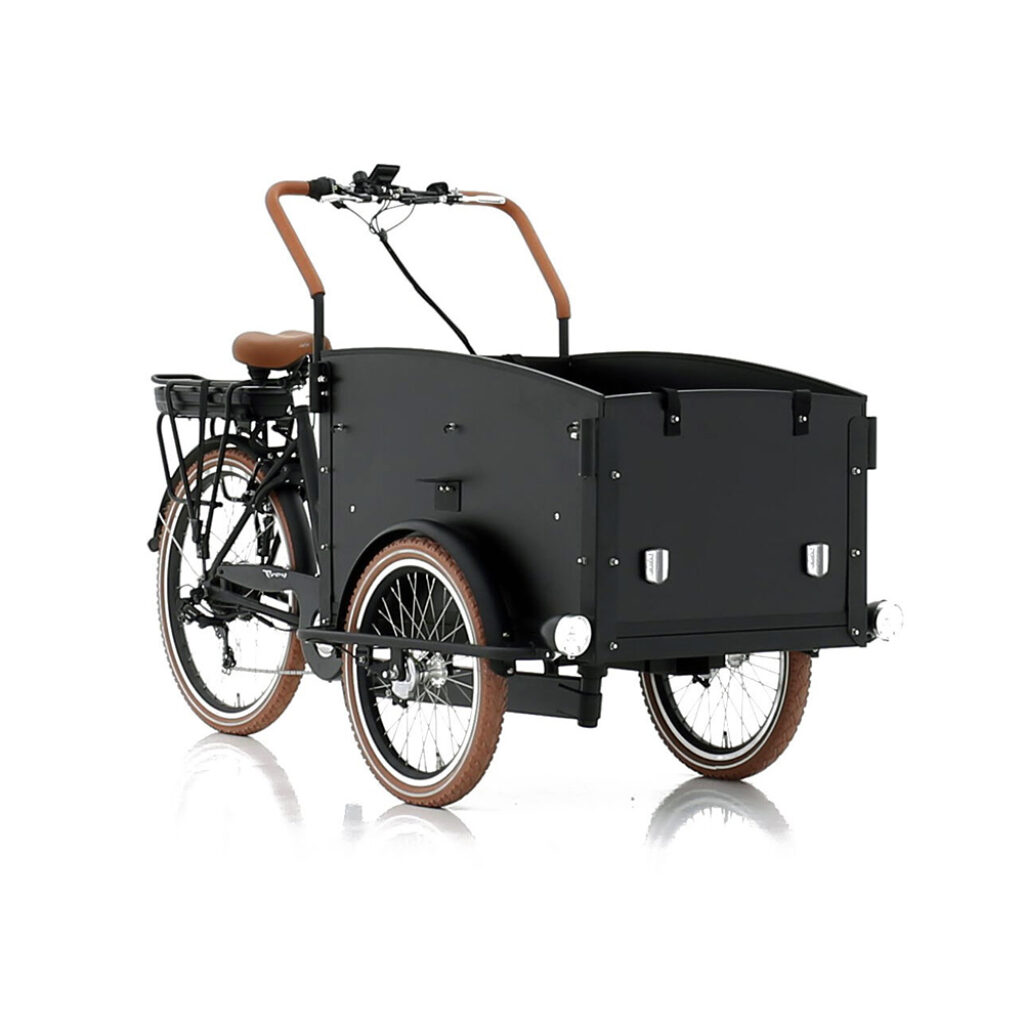
Those bicycles (called ‘ladcycler’) are remarkably useful. People use them for all sorts of things, including transporting their kids to and from kindergarten etc. I’ve never tried it myself, but the kids always look like they’re having a blast.
The thing is, everything - including supermarkets - tends to be smaller here, but also dotted everywhere. I’ve got like three different places for daily grocery shopping within easy walking distance (ten minutes each way), and I’m sort of in the suburbs.
When it comes to trash, public sanitation services are rather effective here. Trash is sorted into paper/cardboard, glass, plastic, organic waste and other. All of them are routinely picked up on different schedules. The first three are recycled, organic waste is either composted or fermented for biogas production with is then used to heat homes or fuel local public transportation (busses). The last category is burned at high temperatures, with the exhaust heavily filtered and the resulting energy used to provided house heating and / or hot water. There are three more infrequent trash collection cycles: Potentially dangerous materials (chemicals, paint, batteries, e-waste), gardening waste (again, composting or biogas - lots of people with gardens do their own composting too - the containers and worm cultures are provided by the municipality for free) and lastly ‘large trash’. This is stuff like furniture, fridges, washing machines etc. That’s picked up once every month on a specific date. A lot of people recycle or upcycle locally by napping stuff before it’s hauled off (which is legal and encouraged).
All in all, a lot of these things are taken care of by people specializing in it and funded by taxes. We pay more in taxes here, but we also get a lot more services in return.
If people know they’re going to be creating lots of waste of a given type - home improvement or construction - you can have a container delivered and picked back up for a fairly modest fee. Similarly, moving homes is generally handled by dedicated companies in standardized moving crates provided by them. It’s not particularly expensive.
First, things are a lot more compact here. It takes me five to seven minutes to reach the nearest local supermarket on foot. That makes it a lot easier to shop at higher frequency but lower load - good exercise too. Of course, that won’t work for larger or special items. For larger loads, locally in Denmark, we’ve got these wonderful things. Obviously, nobody’s going to transport a new fridge or a 1-tonne pallet of wood briquettes on one of those. For that sort of thing, almost all retailers of such things do delivery. It’s more efficient. Instead of everybody having to own their own trucks that are used (relatively) infrequently, stores or manufacturers either independently maintain vehicles that are in constant use or out-source that service to companies specializing in handling logistics. It uses less resources for one company to handle maintenance of say, five vehicles servicing the needs of a hundred customers than for all those 100 customers to all have to own their own vehicles with the same capacity.
Please accept my most sincere condolences.


Certainly, anything that can improve on the efficiency of thermometric conversion, let alone a solid-state device would be great news with wide-ranging positive ramifications. Especially over the massive range of scales that is claimed. Let’s see if the concept can deliver.