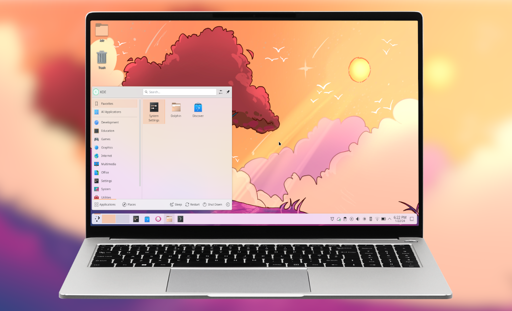
I’ve resisted immutable distros if only because I felt it wasn’t “how linux should be.” That’s probably not even my view because I’ve only used Linux for 3 years, so I’m not some greybeard. I think its been an attitude in online Linux circles that I read and kind of got morphed into.
Today I decided to try KDE Linux. Its still in alpha, so I’m sure I’ll find rough edges, but so far I can do everything I would do on my previous Arch system.
I know with snapper/timeshift you can have the same sort of stability as if you were running an immutable, but it always stresses me out to have a system that can crash. This is all in my head as well because I never had an update mess up my Arch install.
Besides relying on flathub a bunch, everything seems the same, except its an atomic desktop. I’m guessing I’ll struggle with some CLI programs, but I can probably use brew for those. I’m also by no means a power user. I’m a regular user. Use the web, watch videos, music, some games. So I don’t know why I thought I needed access to my core system at all times, even when I never used it.
Anyone else dipping into immutable now that they’ve been around a while? Anyone trying the KDE linux distro?
You must log in or # to comment.
the whole immutable distro idea is just ludicrous to me, in order to upgrade the software, i.e. the new image that got downloaded, I hafta reboot - what the fuck, is this windows 98? I reboot like never, close my laptop or suspend my desktop in the evening and resume in the morning with all my shit how I left it.
it feels like going the wrong way, wasn’t there some progress on hotswapping kernels after upgrade or sumsuch? that was what I thought we were going towards, this feels so awkward and bad on so many levels, nevermind the bloat of getting a whole new OS image because five packages changed… and the cruft and fluff of layering packages and adjacent voodoo, dios mio. basically, everything is way shittier because someone might fuck with /usr/bin or wherever…?
apple did this years ago, with little to no friction. but those fucks update the OS coupla times a year, so dealing with this once a quarter ain’t that big of a deal. apple also ships a stellar backup solution with the system that restores the system perfectly, system and user files, whereas no such thing exists over here.
Fedora Silverblue has been utterly fantastic for me. Only item layered is Opensnitch which is of course also amazing
When I look for new distros to try immutables are highest on my preferred list, Aeon & Kinoite, also very nice, can’t go wrong with any of these IMO
The concept is attractive.
Since back before “atomic” and “immutable” were fashionable buzzwords, I’ve had a few Alpine installations running something like this. Their installer supports it. https://wiki.alpinelinux.org/wiki/Immutable_root_with_atomic_upgrades
I guess I’m also not alone in having been running OpenWrt with atomic upgrades for many years.
Since then been running a ublue fork (Aurora) for a while now. Forking it and running the builds on my own infra instead of relying on their GitHub works after hacking up the workflow files but it’s quite redudandant and inefficient with IMO one too many intermediate layers (kinoite -> akmods -> main -> aurora/silverblue/bazzite -> iso) downloading the same things multiple times repeatedly despite spending considerable overhead on caching. It’s clear that building outside of their GitHub org is not really actively supported.
Also tried openSUSE microOS (Aeon) a year or two back for a while. I want to like it but find zypper and transactional-update pretty uncomfortable and TBH sometimes still confusing to work with. Installing it on encrypted RAID was daunting IIRC. Rough edges. Enough out-of-date docs on the official site to make Debian wiki look like ArchWiki in comparison.
KDE Linux looks promising but it was still in a very early and undocumented stage last I looked. Great to see the progress.
More recently been looking more at Arkane Linux and been using it for some months now. It’s an immutable with Arch base. Much easier to customize and maintain than the ublue options and a lot less time spent triggering and waiting for builds - while having less stuff pulled from third-party servers in the process and an easy way to fork packages by cloning and submoduling an AUR repo. Lot more straightforward to make work without relying on GitHub. If you’re looking at rolling your own builds and are comfortable with Arch, I highly recommend checking it out. My fav so far.
https://codeberg.org/arkanelinux/arkdep
Given the self-contained nature of Debian - cloning the Debian sources is enough to do a complete offline build of everything - I think it’d be the most interesting base for a sustainable immutable distro unless you go to the opposite end with “distroless” (no comment). Looking forward to one.
Arkane looks very cool. Will have to look into it.
Let’s be honest, immutable distros repaired a well meant feature of “do whatever you want”. Yes it is possible on a regular distro doing stuff with the core files, changing or deleting them. But not everyone is prepared for the consequences. That’s where immutable hits in.
The good thing is, whatever you wanted to do with the core system, it’s anyway possible but with distrobox or ostree. But it is separated not integrated.
Only downside is, that it’s flatpak who wins the app package manager fight. Not the best one, but the best we actually have.
Flatpak wins because we need one “Linux-wide” solution—one universal package format—and it was the first.
Distrobox can make any package format work on any distro if that is what you want.
My favourite package manager is APK v3 but the distros that use it do not have big repositories. So I end up using an APK host with Pacman / Yay running in a Distrobox.
Started on windows, like so many of us. Grew up with my father yelling at 3.1. Kept going with Microslop, until last year, when I switched to Mint. Just wanted to escape the insanity. I never really enjoyed Mint, and about 8days ago I installed Bazzite. There are no words to describe how happy I am with that distro. Its everything I wanted and more. Its fucking fast, everything works. I thought it was only going to be the case for basic things and gaming… But its fantastic across the board! Work, gaming, chilling, whatever floats your boat. I’ve been simping and talking so much about it, that my wife might start taping my mouth shut.
I can relate. I installed Bazzite, because I wanted a solution which works with my Nvidia GPU out of the box.
Now it’s my daily driver.
I’d be interested to hear some people’s reasoning for preferring immutable. I briefly used Bazzite (so basically Fedora silverblue), but as somebody who is an intermediate user, I found it frustrating, so switched to regular Fedora.
For me, the problem was that everything I’d learned in my (admittedly brief) experience with linux was made more complicated by being immutable. When I read around about why I might want to use such a distro, I was left feeling that none of the positives were that applicable to my uses.
So what are your uses that make it a good fit for you?
I use my computers for work and I borked a couple of systems before just picking Debian, I don’t feel like I need an immutable distro because now I know better and I read better to make sure I understand what’s going on in my computer, but I need security and stability more than anything else and I might give an immutable distro a shot next time I upgrade.
I think the main reason is experience on a distro with a crappy package manager that can easily result in a damaged or even unbootable system. Some of the most popular and even reportedly “stable” distros fall into this category.
You can think of an immutable distro as a system that treats the entire core OS as a single package. As long as you have that installed, it will boot.
I have broken and repaired many distros in the past and most package managers were able to handle it.
This is why I always keep the last 3 installed package versions around.
In Arch based distros you have to install downgrade. Idk why it doesn’t come with the base pacman tools, as it can seriously save your ass.
The most resilient package manager I found to be dnf. I once messed up an upgrade from Fedora 20 to 21 or something and many packages were 20, some were 21 and some were rawhide. Boy did I think I needed to fix this manually. I fixed the misconfiguration, made internet available in a root shell and dnf magically repaired every dependency hell I found myself in.
Fedora is now my work desktop and Arch with snapper runs on my personal devices.
Immutable distros or things like NixOS seem fine if idiots need to use them. However, I’m not an idiot and usually don’t give idiots root rights.
If you want your system simply to work and never customise it beyond what the maintainers thought out for you, NixOS and Silverblue etc. might be cool. But for me there always was a point where I had to do hours of work thinking “good Lord Linus the Creator, this would be so much easier with a regular distro”.
Went so far to ragequit NixOS three times now and everyone who uses it nowadays gets the same look as these weaboo Arch supremacists way back when. Maybe NixOS is good in 10 years but at the current rate, I’d just burn the project honestly. So wasteful, both for the environment and man hours.
I didn’t realise that could happen, I mean, I’ve never experienced something like that myself. Having said that, I did specifically choose Fedora because it’s a ‘famous’ distro and I’d want it to be as stable as possible.
I have been using bazzite for over a year after starting with ubuntu, and then doing a “I’m doing everything myself” arch install (I learned SO MUCH).
I love it. I got a little frustrated about some of the package installation restrictions, but then I read about distrobox, and now I have an arch box, a ubuntu box, and an ollama box running a local LLM. No more problems with finding CLI programs. I even used the arch box to run adb and fastboot to flash android stuff, it worked flawlessly.
And of course gaming and standard desktop tasks work with zero problems. Next I’m going to convert my wife’s Windows 10 PC to bazzite, and setup excel and some proprietary software for her.
I migrated from W11 to Kinoite and NY workflow is similar - flatpak, distrobox (right now I have Arch and Ubuntu boxes for different programs) and only layer essential system wide packages to the ostree.
Its very stable and I seriously enjoy using it. The *how Linux should be" piece is mostly resolves and enhanced by using distrobox.
KDE plasma is awesome and a great DE for a beginner like me.
Were the codecs annoying in Kinoite? I always got thrown off because Aurora came with “batteries included” so I figured Kinoite would be a pain, but maybe its not.
Not at all for me, but my primary use case is audio production. Everything recognized and sync’d on first boot - audio interface, controllers, synthesizers etc. No major driver or codec issues at all.
I use Intel Arc for my GPU and it picked that up right away no need to layer any additional packages. Definitely check around if you’re on nvidia I think that’s the bigger codec issue that is solved by ublue distros
I did run into some issues trying to run my DAW as a flatpak and now have it working well in a distrobox, but that’s largely because I am set on still running some windows plugins via Wine and yabridge…
I’m on opensuse aeon and it is exactly like fedora silverblue, except that it’s rolling. I use flatpaks and install the rest via distrobox. I guess it is the same on KDE linux.
Linux is growing together.
Edit: aeon is european which is why I use it and not fedora. If fedora was european, I probably would use fedora.
I also wanted to try Aeon. I always had issues installing Tumbleweed though. But it looks super nice.
I want to try distrobox as well. Never used it before but I was just reading about it and thinking if I can benefit from it.
For some reason rpmostree always confused, but I’m the type of person to overthink things. Just using flatpak seemed easier, but I know you can pretty much just do that in Silverblue.
Rpm ostree is for system packages. Luckily I rarely need any. Db for everything else
I’ve tried it a couple times since the steam deck came out. Kionoite and Silverblue. Just ended up back on Kubuntu upgrading with every 6 month release. I still use Distrobox. Just don’t feel the need for an atomic base yet. May try again someday but for now I like having a Debian/Ubuntu base and easy option to use PPAs when I want
I would agree with you. That said, bad experiences with things like PPA’s are one the reasons people reach for immutable distros.
I think as soon as you start adding PPA’s to your system, you should consider a distro with a larger repository. But that is just my opinion.