

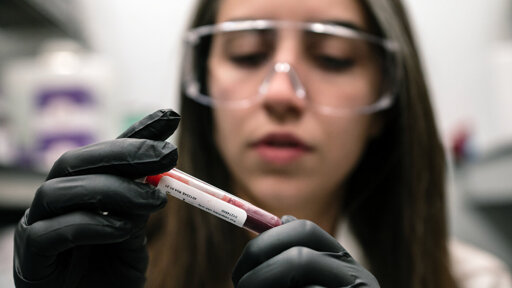
Scientists have long known that people living at high altitudes, where oxygen levels are low, have lower rates of diabetes than people living closer to sea level. But the mechanism of this protection has remained a mystery. Now, researchers at Gladstone Institutes have explained the roots of the phenomenon, discovering that red blood cells act as glucose sponges in low-oxygen conditions like those found on the world’s highest mountaintops.
In a study in the journal Cell Metabolism, the team has shown how red blood cells can shift their metabolism to soak up sugar from the bloodstream. At high altitude, this adaptation fuels the cells’ ability to more efficiently deliver oxygen to tissues throughout the body, but it also has the beneficial side effect of lowering blood sugar levels.
…
https://www.cell.com/cell-metabolism/fulltext/S1550-4131(26)00018-5
What happens if you fill up on sweets for a month at high altitude, soak up as much as you can, then go to low altitude as quickly as… safe-ish-ly… possible?
Will your blood turn to fudge?
Come on , baby , let me write the grant proposal
then go to low altitude as quickly as… safe-ish-ly… possible?
so that’s a no go on the palpatine expressway?
Hi.
Do you need test subjects?
i also do not have the beetus and eat a shitton of sugar. i have all the other diseases. I’m not sure whether i should be used as a control or outlier, but i would like to volunteer to have the study pay for my travel at least (i can supply my own sugar)
Sorry to disappoint, but it is stated the effects of hypoxia persists for up to a month. So you would just slowly get back to normal state.
