

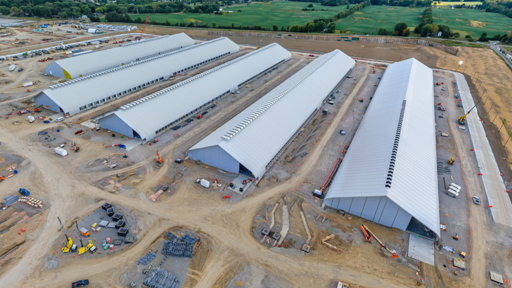
These “makeshift” structures are housing hardware that costs millions of dollars in total.
“Putting AI servers inside tents, officially called “rapid deployment structures,” is one of the more unique approaches to the AI build-out, Thomas said. They’re certainly not as sturdy as physical buildings made from steel and concrete, with one commenter comparing it to the “classic $10k racing bike with a $9 lock” situation.”
It’s pretty common for natural gas electric plants to use Brayton cycle turbines, which is the same thermodynamic cycle that the turbojet engines on airplanes use. But you can optimize the designs on the ground for efficiency (and zero thrust) instead of thrust-to-weight.
It’s also common to use “combined cycle” technology which mashes the Brayton cycle engine together with an older-style steam loop for extra efficiency.
After reading the article, I think they’re just saying they installed some miniaturized natural gas plants. I don’t think they’re literally running aircraft engines on the ground.
There’s at least one company that does tweak (iirc used) airliner turbofans by taking the fan part off so they just have the turbojet (which is already tuned to mostly generate rotational energy to drive the fan turbine rather than produce thrust itself) and use that to spin a generator. Obviously, it’s a bit more complicated than that in reality, but there are quite a lot of old engines no longer certified for flight out of an abundance of caution but that still work fine, and a market for high-power generators that don’t need to be the pinnacle of efficiency (originally as backups just for occasional use, and now because of AI companies caring only about speed and not about cost).