

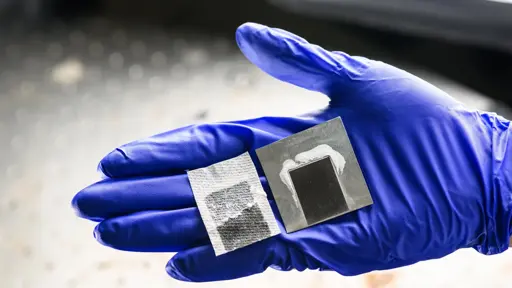
At the heart of the technology are solar panels made from black metal that has been treated with femtosecond lasers. A femtosecond is an extraordinarily short unit of time, equal to one quadrillionth of a second. Pulses from these ultrafast lasers can precisely alter a material’s surface, creating microscopic structures that dramatically change how it interacts with light and water.
Neat
And it’s very easy to make, you just need to ask Finland to get black metal
Yeah, but the environmental cost of the corpse paint hasn’t been well studied
Sorry for being in a hurry, but these new methods differ from de-salination plants…?
I got you. From the article:
Desalination can provide a critical water supply, but today’s most common methods come with significant drawbacks. Reverse osmosis forces water through specialized membranes to remove salt, while thermal distillation uses heat to separate fresh water from seawater. Both approaches can consume large amounts of energy, often require water treatment before and after the process, and generate a highly concentrated salty waste known as brine.
When that brine is discharged back into the ocean, it can increase local salinity and reduce oxygen levels, creating harmful conditions for marine organisms.
In Professor Chunlei Guo’s lab at the University of Rorchester, researchers developed a solar desalination device featuring laser-etched superwicking black metal, a technology that produces fresh water from seawater while capturing salts and minerals instead of generating harmful brine waste. Credit: University of Rochester / J. Adam Fenster
Tl;dr - Different method for the same desalination, but keeps & transforms the waste into useful stuff instead of throwing it out
Huh! Okay…
Thank you!Unfortunately, haha, as with most such tech advances, I’m just waiting for billionaire a-holes to buy up the means of production and use it to further leverage it against the common man for capitalistic purposes. Same ol’, same ol’.
(nevermind, that’s just my cynical side talking 😅)
Its crystallization based chemistry if you want to know what they’re doing.
Um… would I need to embrace death or stick to pure science in terms of understanding? (because I tend to go for the latter)
Pure science although they use an odd combination of light based chemistry that does material manipulation to create the coffee ring effect which kind of is novel I don’t really go into light chemistry.
I don’t know how regular desalination plants work, this method apparently works by evaporating water on a black surface, and the cool trick is that the surface is self cleaning, so the salt can be recovered as a solid.
Most modern desalination plants use a “reverse osmosis” method.
You have a barrier that water can pass through, but salt can’t. Normally, water would be drawn across this barrier, till the salinity is the same on both sides. This is osmosis, and how things like plants draw in water.
Reverse osmosis works by using a high pressure on the salty side. This effectively forces water against the osmotic gradient. This is generally done with relatively small amounts of salt water at a time. The end result is fresh water on one side, and extremely salty water on the other. If the salty “brine” is discharged too fast, it can mess up the local salinity levels in the sea around the vent. The process is also very energy intensive (though a LOT less than boiling the water off).
You also have the problem of the membrane being very sensitive to getting damaged or blocked up. You need to clean the sea water up a lot before you can desalinate it.
This new process would help avoid the brine issue, as well as likely being less sensitive to contaminants.
Pretty sure regular plants usually heat water, collect the steam and then discharge the brine back out and repeat that.
Interesting. I’ve previously seen survivalist methods work similarly with as little as a container of salty water placed inside a modified 2L soda bottle. Sun-powered evaporation makes for a natural still! :D
Where are they supposed to dispose of the salt? I get why concentrated brine is bad to just dispose into the ocean, but the same amount of salts with less water wouldn’t make it any better. Is the plan to permanently sequester these salts/minerals from the water cycle?
Sell it. People will pay for salt.
To give an actual answer: put it in already hollowed out salt diapirs at the bottom of salt mines.
Humans: “we can improve nature” :D
We put em in barrels and store them in “save” locations where they can degrade over a couple of thousands of years and call it a plan.
I mean what’s going to happen, nothing right? (And if something happens I won’t be alive to give a fuck, so fuck whoever is alive then)
Edit:
Yes, that was a jab at nuclear power and its supposedly “save” waste disposal.
I mean, we could just make a second dead sea. Or do an advertising campaign to make sensory deprivation tanks popular.
I wonder what Singapore does then because they don’t have the land to store the waste probably.
This is what will happen. We’ll use solar, or maybe someday fusion, to desalinate sea water. Then we’ll need to pipe it where it’s needed. We’re not going to run out of water long term, it will just be more expensive. Short term, yeah, there will be issues, and they could get bad.
We need to rein in capitalism and replace money with compassion as the driving motivation. I know it seems impossible, but it will happen one way or another. Either for billions of us, or for whoever is left after the apocalypse.
Does anyone know what the drawback of a setup that distills the sea water and then air dries the brine. This always seemed like the easiest solution when I thought about it?
I imagine the issue is the sheer amount of brine produced would require ginormous salt pans to drive off the last of the water, compounded by it taking take longer to fully dry compared to the time taken to desalinate an equivalent amount of water as salt is very hygroscopic.